








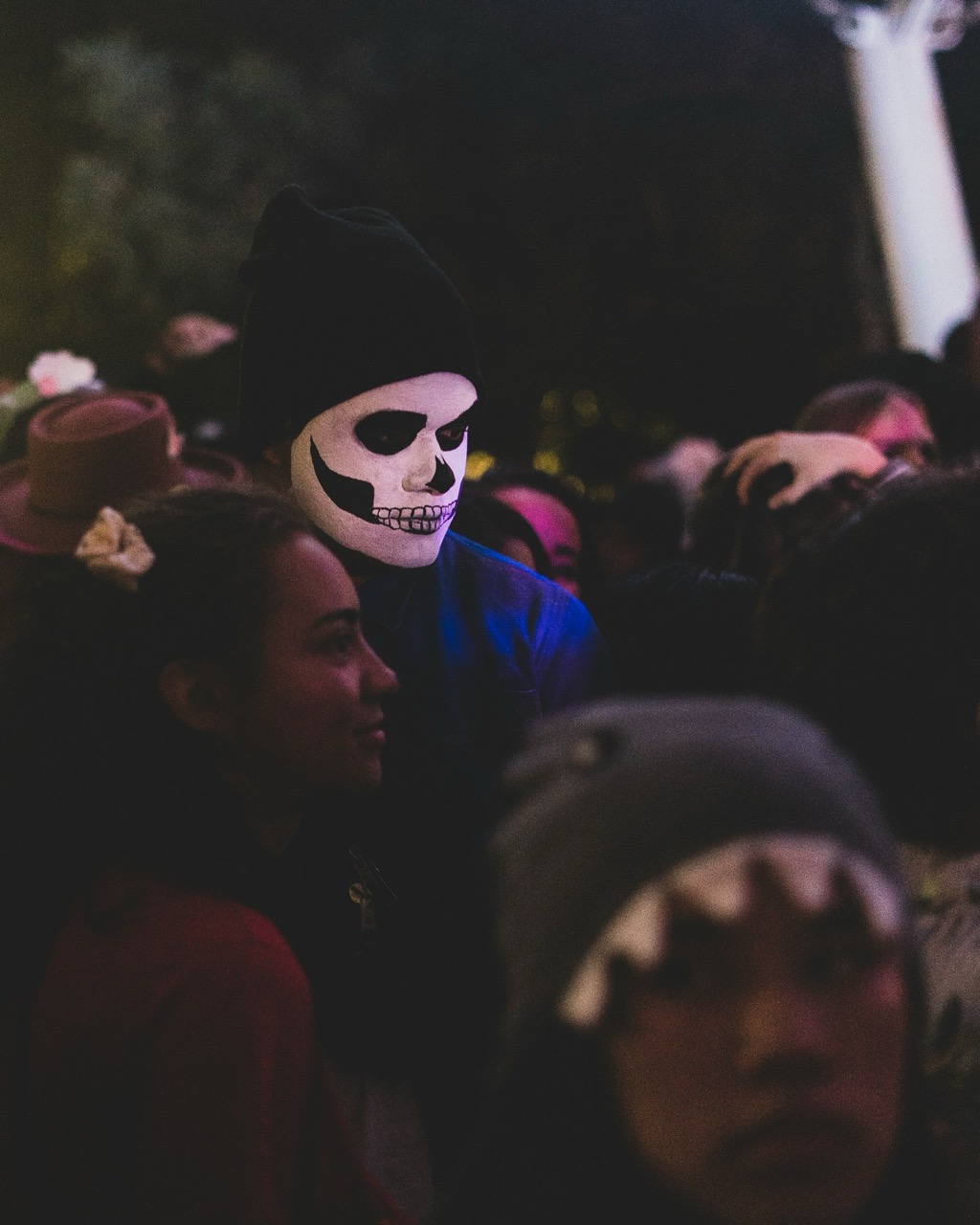
Skull face paint and a flower crown are now standard sights at late-October parties, but the tradition behind them is a remembrance holiday, not a fright night. UNESCO recognizes Mexico’s Indigenous festivity dedicated to the dead, inscribed on the Representative List of the Intangible Cultural Heritage of Humanity, as a practice in which families welcome the transitory return of deceased relatives and loved ones each year from late October into early November. Understanding that purpose is the first step to dressing for it respectfully.
What the holiday actually marks
According to UNESCO, families ease the souls’ return by laying flower petals, candles, and offerings along a path leading from the cemetery to their homes, then preparing the deceased’s favorite dishes and arranging them at a home shrine and at the tomb alongside flowers and handcrafted items such as paper cut-outs. The body describes the celebration as a fusion of pre-Hispanic religious rites and Catholic feasts, and notes that it reinforces the individual’s role within the community. This is a family observance of memory and continuity, closer in spirit to a graveside visit than to a costume contest.
That blended heritage runs deep in the borderlands too. The U.S. National Park Service, describing a Dia de los Muertos altar at Tumacacori National Historical Park, explains that the holiday integrated customs of native cultures, mission-era Jesuit and Franciscan priests, Spanish colonists, Mexican settlers, and citizens of the United States arriving in the nineteenth century. Visitors to that ofrenda were invited to leave photographs, gifts, tokens, messages, and toys in memory of loved ones, the same offerings that anchor a home altar.
The ofrenda and its symbols
The ofrenda, or offering, is the heart of the holiday. Marigold petals, candles, food, and photographs are not decorations for their own sake; each is meant to guide and welcome a returning spirit, as the UNESCO description of petals and candles marking the path makes clear. When people paint their faces as calaveras, or decorated skulls, they are drawing on this imagery of death as a familiar part of life rather than a horror to be feared. The skull in this context is affectionate, often smiling and brightly colored.
The elegant skeleton figure many costumers imitate, commonly called La Catrina, comes from Mexican printmaking and satirical art of the early twentieth century and entered the holiday’s popular imagery later. It is widely associated with the artist Jose Guadalupe Posada. Treat that lineage as artistic history rather than ancient ritual: the face paint and finery are a modern visual language layered onto a much older observance of remembrance.
Dressing for it with respect
Because the holiday belongs to living communities, the line between appreciation and appropriation is worth taking seriously, and reasonable people draw it in different places. A few informational points can guide the decision without dictating it. Calavera face paint, marigolds, and formal dress reference specific meanings of memory and welcome, so context matters: joining a community celebration or an invited event reads very differently from wearing sugar-skull makeup as a generic Halloween scary look. The holiday is not interchangeable with Halloween, even though the calendars nearly touch.
If you are unsure, the most reliable guidance comes from the people and institutions who hold the tradition. Many museums, cultural centers, and Mexican community organizations host Dia de los Muertos programming and publish their own guidance on participating; the National Park Service events and UNESCO’s heritage listing both point to that community-led framing. Deferring to those voices, rather than to a costume label, keeps the emphasis where the tradition puts it.
The takeaway
The imagery is beautiful, and it is meant to be. Marigolds, candlelight, and painted skulls carry a message that death and life stay connected through memory. Someone who understands that an ofrenda guides a returning soul, and that the calavera smiles on purpose, is already dressing from a place of respect rather than costume-shop shorthand. Learn the meaning first, and the makeup follows in the right spirit.